


What Is a Cataract?
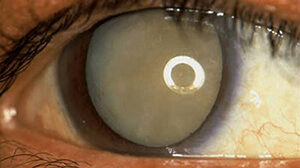 A cataract is a clouding of the normally clear lens of the eye. Most cataracts form gradually, usually starting after around age 60, but may not need removal for many years. The cause of cataracts is not known but is considered an inevitable part of aging.
Cataract Symptoms
The main symptom of a cataract is difficulty with vision.
You may experience:
- Blurry, dim vision
- Difficulty completing tasks in low light situations
- Trouble driving at night
- Trouble with detail work
- Difficulty with colors
- Increased light sensitivity
- Double vision in one eye
If you notice any of these symptoms, a complete eye examination will usually determine if a cataract is a cause.
Preparing for Cataract Surgery
To determine whether it’s time for you to undergo cataract surgery, you will need to attend a consultation with your eye doctor at Eastside Eye Associates. During this appointment, they will conduct a comprehensive eye examination, ask questions about your symptoms, review your medical history, and discuss your lifestyle and visual goals.
You will also have the opportunity to select the intraocular lens (IOL) that will replace your natural lens during cataract surgery at this appointment. The options offered at Eastside Eye Associates include standard monofocal lenses, toric lenses, the ReSTOR multifocal lens, and the Crystalens accommodating lens.
Cataract Surgery in Manhattan
Cataracts are only treatable through surgery, and surgery is generally advisable only if vision impairment affects your quality of life or the ability to do the things you enjoy.
A cataract does not have to be removed just because it is there, so being diagnosed with a cataract does not mean you must have surgery. In general, a cataract has to affect your vision beyond what glasses can correct.
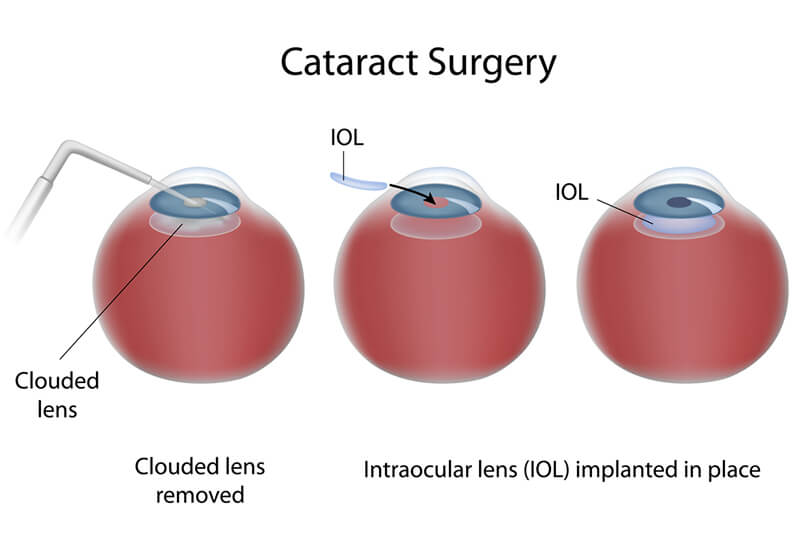
Fortunately, cataract surgery is the most successful surgery performed on the human body, and there are about three million cataract operations done annually in the United States. It is generally an outpatient procedure, taking 30 minutes or less, with most patients returning to full activity by the next day.
A clear, plastic intraocular lens (IOL) is in-variably exchanged for the cloudy one that is removed, with vision vastly improved over what it was before surgery. A recent advance in cataract surgery is the use of the femtosecond laser, a computerized highly accurate apparatus that is used to perform certain parts of cataract surgery.
IOL’s now come in the standard “monofocal” type, which corrects vision for either distance or near, or one of the “premium” types such as the “multifocal” lens which corrects vision not only for far but also for near, and the “toric” or astigmatism-correcting type which can improve both distances and near if astigmatism is an issue.
A critical part of your cataract decision-making process will be a thorough review of IOL options with your doctor so that the appropriate IOL type will be used for your surgery.
At Eastside Eye Associates, Dr. Shulman and Dr. Nagel use the most advanced instrumentation available to ensure as successful an outcome as possible.
What to Expect After Cataract Surgery
After cataract surgery, you will need to have a friend or family member drive you home to begin recovery. It’s best to rest your eyes and prioritize relaxation to give yourself time to heal. Many patients choose to listen to audiobooks, podcasts, or music to pass the time. Your cataract surgeon will give you post-operative instructions, including:
- Applying prescription eye drops
- Wearing an eye shield while you sleep
- Refraining from strenuous exercise for 2 weeks
- Avoiding getting water in your eye
- Not rubbing your eye
- Wearing UV protective sunglasses when outside
At your follow-up appointments, your cataract surgeon will assess how your eye is healing and let you know when it’s safe to return to normal activities. Most patients are cleared to resume work and driving after one to three days, but healing times can vary from patient to patient. You can expect your vision to continue to improve over the following weeks, reaching your peak vision after several months.
Cataract Surgery Risks and Complications
Some patients may experience mild side effects after cataract surgery, including blurry vision, redness, excessive watering, or a gritty sensation in the eye. However, these are often temporary and resolve within hours or days. If you experience severe eye pain, mucus or discharge around your eye, worsening vision, or flashes and floaters, contact your ophthalmologist right away. These could be signs of complications, including IOL displacement, infection, or retinal detachment.
While these are rare, it’s essential to remain vigilant about your symptoms and seek care as soon as possible if you notice anything concerning. A more common, yet less dangerous complication of cataract surgery is posterior capsular opacification, sometimes referred to as “secondary cataracts”. This is when the lens capsule that holds your natural lens becomes clouded after cataract surgery. Fortunately, this can be remedied through a simple and quick procedure called posterior capsulotomy. The procedure involves using a specialized laser to make a tiny hole in the lens capsule, restoring your vision.
Are you interested in cataract surgery? Contact Eastside Eye Associates to schedule your cataract surgery consultation today with Dr. Shulman or Dr. Nagel.
